The issue of accessibility cannot be ignored. Tactile paving and tiles, previously perceived as an additional means of landscaping, are now recognized as an essential element of infrastructure. Tactile coatings are being actively introduced in major transport hubs such as railway stations, metro stations, bus stations, and airports. They provide people with visual impairments with safe movement and confident orientation in space. These elements, or tactile surface indicators, play an important role: they inform about possible obstacles, direct movement and increase the level of safety.
Tactile Paving as an Element of Safety

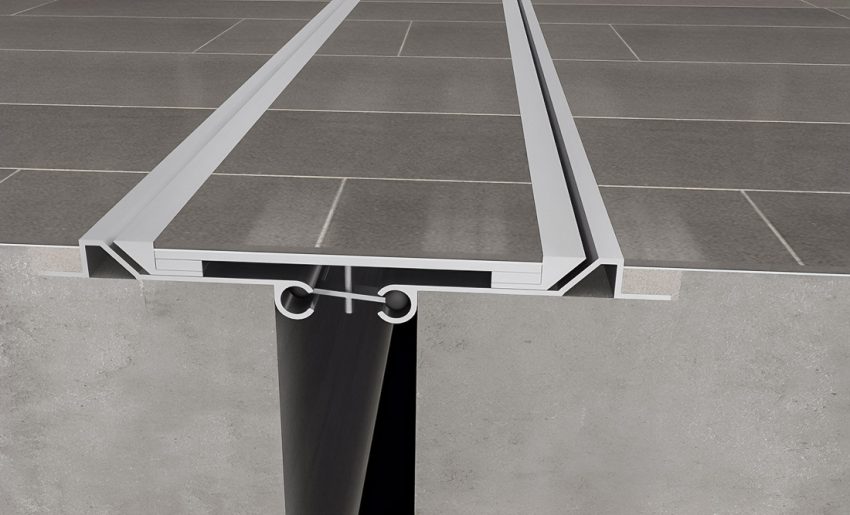
Materials for slabs are diverse: polyurethane, concrete, ceramics, stainless steel. Each of them has its own purpose. Polyurethane is durable, it is not afraid of heat and ultraviolet radiation. Concrete is convenient for large-scale projects. Steel is resistant to wear, and ceramics are clearly visible visually. This diversity makes it possible to adapt solutions to different tasks: from the edges of platforms to the corridors of shopping malls. For long-lasting integration into such spaces, many projects also rely on aluminium trim manufacturers to provide finishing profiles that complement tactile paving and ensure durability.
International Standards for Tactile Paving

International standards set clear limits. BS 7997:2003 in the UK and AS 1428.4.1:2009 in Australia describe in detail the size and shape of the plates. In the USA, the requirements are regulated by ADA and ABA, and in the UAE, the Dubai Universal Design Code applies. Uniform standards are important because navigation should be equally clear everywhere.
Survey Results and Statistical Insights

Interesting data came from Saudi Arabia. 120 people participated in the study: 70 designers and 50 end users. Among the designers: 45% architects, 35% engineers, 20% project managers. The average experience is about ten years. Among users: 60% had mobility problems, 25% had sensory problems, and 15% had intellectual disabilities.
The figures revealed something alarming. 55% of designers admitted that they are not sure about their knowledge of the standards. This indicator is lower among users 33%. Another fact: 68% of specialists do not turn to accessibility experts. The economic factor also sounds acute: 45% of designers and 66% of users doubt that the modifications will justify the costs. Nevertheless, half of the participants agreed that accessibility should be a priority.
Key Barriers and Differences in Perception

Financial constraints, complexity of regulations, and lack of knowledge are the main barriers. The gap in perception between designers and users is obvious. Statistical analysis using t-test and F-test showed significant differences, especially in financial resources (p-value = 0.040) and social responsibility of building owners (p-value = 0.048).
Designers are more likely to think about the budget and the requirements of the law, while users are more likely to think about real conditions: elevators, ramps, sanitary rooms, signage. That is why in the Eastern Province of KSA 183 people with disabilities indicated serious difficulties in accessing public buildings.
International Experience and Comparisons

Examples from other countries show similar trends. In Turkey, designers are limited to formal compliance with the law. In Iran, budget barriers prevent the implementation of solutions. In Australia, it was found that people with intellectual disabilities make up about 1.24% of the population, but their needs are rarely taken into account in construction.
These data are consistent with the situation in the Gulf countries. There are legislative measures, but their implementation remains incomplete. The reasons range from lack of resources to lack of clear instructions.
Future Prospects for Inclusive Urban Planning
The future is connected with the development of smart cities and universal design. Accessibility is not only about helping individual groups, but also increasing convenience for everyone. The possible steps are obvious:
- Training of architects and engineers
- Simplification of the regulatory framework
- Introduction of incentives for building owners
- More active participation of public organizations
- Implementation of joint design (user-centered design)
Tactile paving, inclusive design, international standards all form a new norm. Accessibility ceases to be a gesture of goodwill and becomes a duty. Although financial and organizational barriers are holding back progress so far, research shows that both professionals and users are aware of the value of an accessible environment. Consequently, the future of transportation hubs and urban development in the Persian Gulf countries is directly linked to equal access for everyone.

I am an award-winning freelance writer who specializes in finance topics. I have also appeared as a financial expert on The Today Show and Good Morning, America.