“Tell me and I forget, teach me and I may remember, involve me and I learn.”
Ask any parent in Dubai or Abu Dhabi what their child talks about after school, and it is rarely the page numbers they finished in a workbook. It is the day they mixed two liquids and watched them fizz, or the afternoon their teacher wheeled in a skeleton model and let them touch the ribs. Practical exercises are the memories that stick, and there is a good reason for that: they turn ideas from something a child reads about into something a child does.
Across the UAE, schools have been leaning harder into hands-on learning as the Ministry of Education pushes for inquiry-based science and STEAM programmes. Whether your child attends a public school in Sharjah or one of the American elementary schools in Dubai the shift toward practical, experience-first lessons is reshaping how kids meet the world.
What Practical Exercises Actually Do for a Child
Sitting still and copying notes has its place, but it is only one channel of learning. A practical exercise pulls in the hands, the eyes, and often the whole group of classmates at once. That combination is where the real work happens for a young brain that is still building its map of how the world fits together.
When a seven-year-old drops a small piece of magnesium into vinegar and watches bubbles rise, three things happen at the same time. A concept from the textbook becomes visible. A prediction gets tested. And a small, honest question forms in the child’s head: why did that happen? That last part, the question, is the engine of every future lesson.
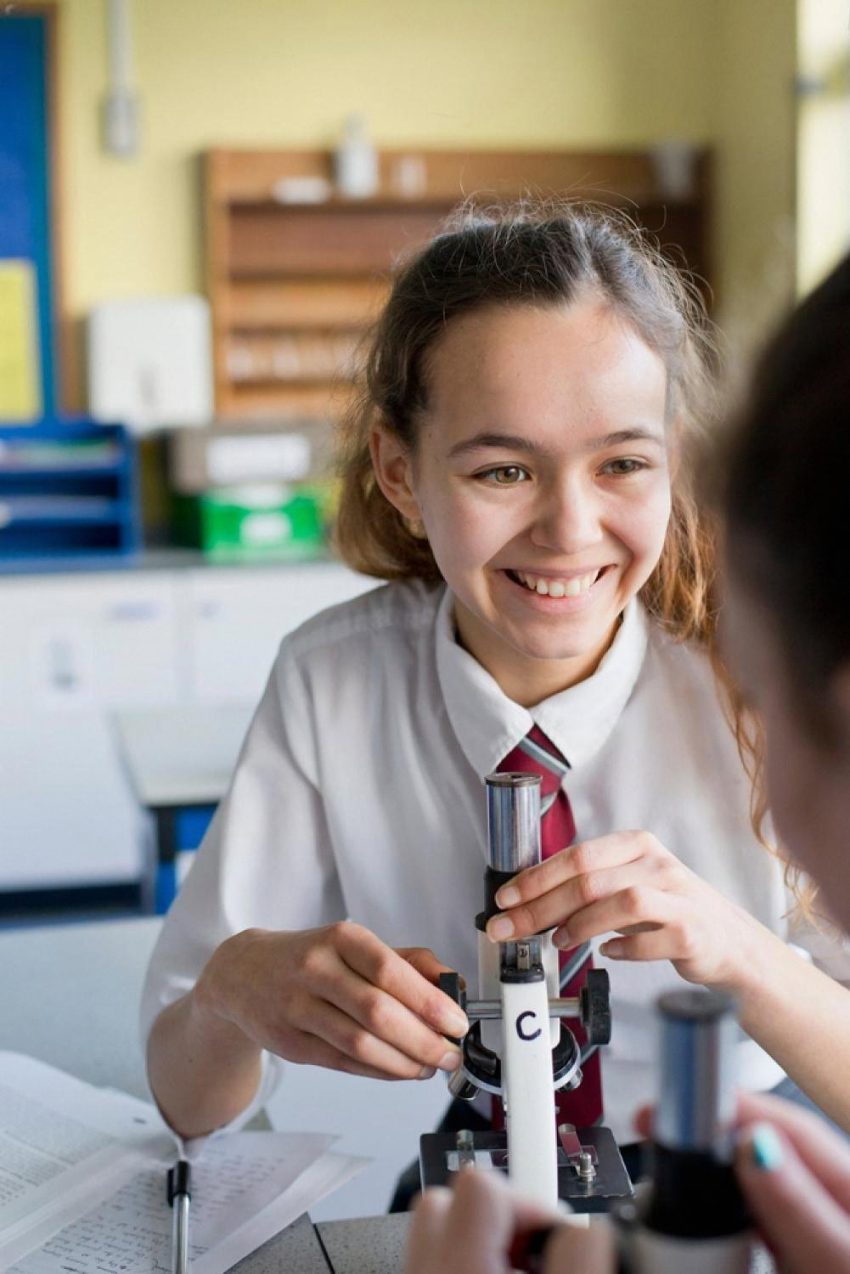
- Ideas become concrete. Looking at a leaf’s cells through a microscope is a completely different experience from reading the word “chloroplast” on a page.
- Memory improves. Multi-sensory learning has been shown to strengthen retention compared with passive reading, as documented in research summarised by the learning modalities literature.
- Curiosity compounds. Every “what if we tried this instead?” becomes the seed of the next lesson.
- Teamwork develops naturally. Pouring, measuring, and observing in pairs teaches kids to listen and share without a lecture on collaboration.
- Confidence grows. A child who has built a working circuit stops being afraid of the word “electricity.”
From the Classroom to the Dinner Table
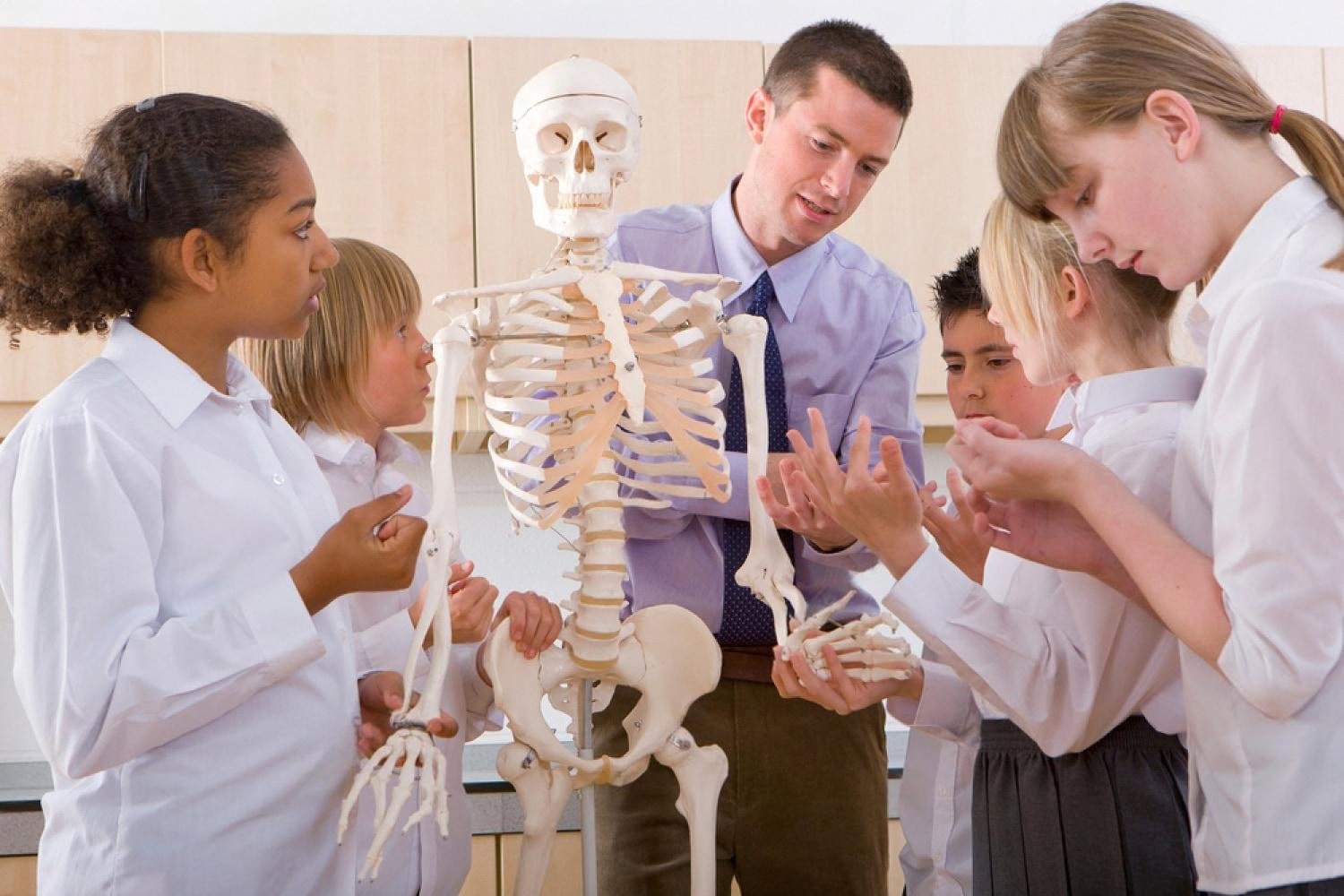
Parents in the UAE often tell the same story: on days when a child has done a real experiment, they talk the whole drive home. They describe the colour of the reagent, the strange shape they saw under the microscope, the way the joints of the skeleton clicked when the teacher demonstrated how a knee bends. That excitement is not a bonus, it is the point. A child who leaves school wanting to keep talking about what happened is a child who will show up ready for tomorrow.
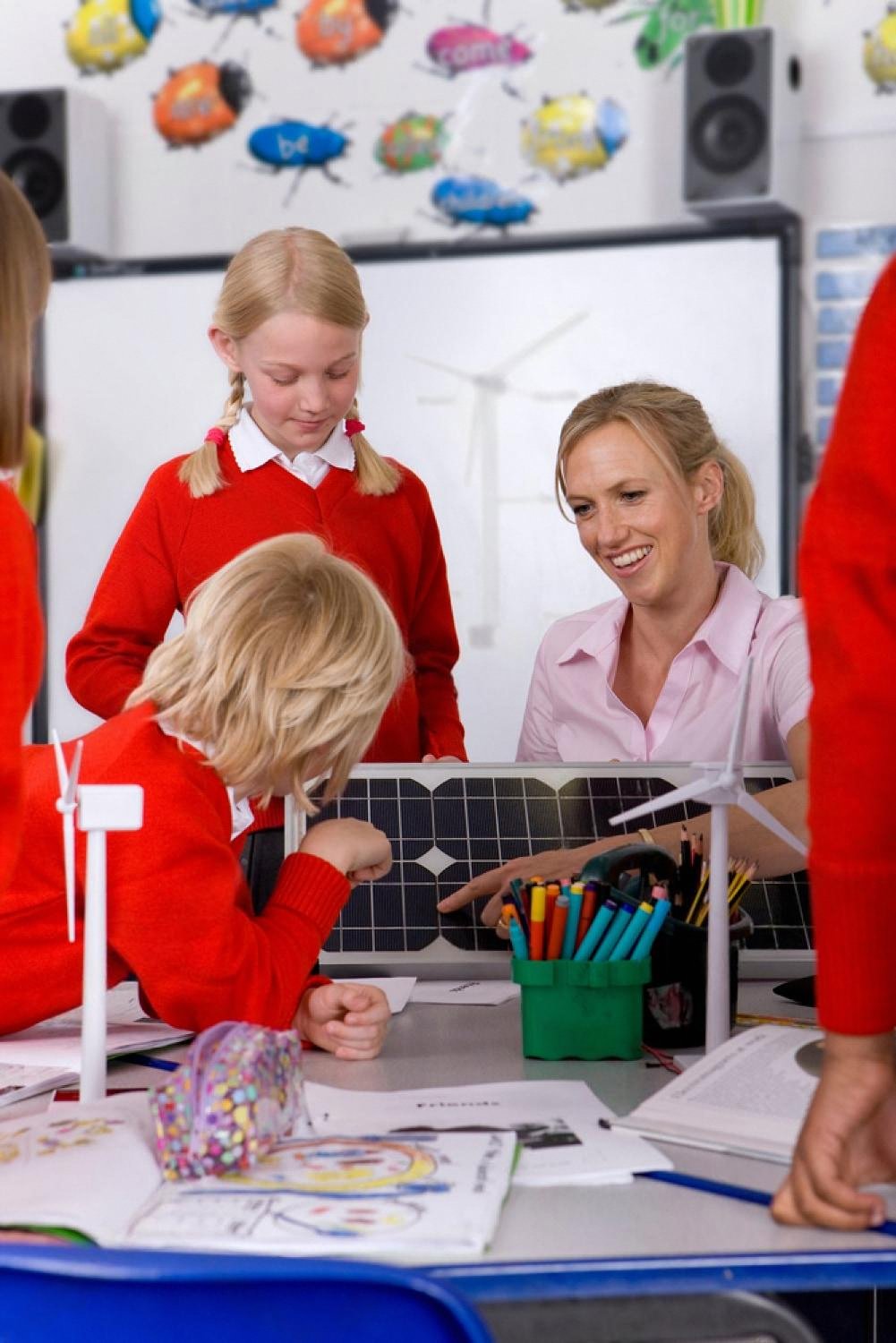
This matters even more in a country like the UAE, where classrooms often bring together students from twenty or thirty nationalities. A shared practical task cuts across language differences in a way that a lecture cannot. Two children who struggle to chat about a book can still work side by side wiring a small solar panel or building a model wind turbine, and by the end of the hour they have communicated plenty.
The Kinds of Practical Work That Move the Needle
Not every hands-on activity has the same weight. The strongest practical exercises share a few features: they connect to something a child can already sense, they leave room for a wrong answer, and they end with a short reflection. Here is what elementary teachers in the UAE tend to lean on most.
Simple Chemistry
Mixing safe household reagents to observe colour change, gas release, or temperature shifts. Kids see cause and effect in seconds.
Microscope Sessions
Looking at onion skin, pond water, or a strand of their own hair. Nothing beats the moment a child sees a cell for the first time.
Anatomy Models
Skeletons, muscle diagrams, and joint models make the human body feel like a machine the child can understand rather than a mystery.
What to Look For as a Parent
If you are choosing a primary school in the UAE, or trying to gauge whether your current one is doing enough hands-on work, a school tour tells you a lot in fifteen minutes. Look at the science room, not just the brochure. Ask when the last experiment happened.
- A dedicated science lab with microscopes, safety goggles, and space for small groups to work.
- Weekly practical sessions built into the timetable, not saved for a once-a-term open day.
- Teachers who can name the last three experiments their class ran and what went wrong.
- Student work on the walls that shows process: sketches, wrong guesses, revised diagrams.
- A curriculum that ties practical work to the KHDA or Ministry of Education framework, so it counts toward real assessment.
- Field-based learning, such as visits to botanical gardens aquariums, or the Museum of the Future, that extends the lab outside the school walls.
The Long Tail: Why It Pays Off Later
The child who learned about buoyancy by dropping objects into a bucket at age eight is the same child who, at fifteen, will not be intimidated by a physics problem on the same topic. Practical exercises build a kind of quiet confidence that is very hard to teach in any other way. The world stops being a wall of vocabulary and becomes a set of things a person can poke at, take apart, and understand.
That habit of poking at the world is what a good primary school gives a child, and it is worth more than any test score they will bring home this year.
Frequently asked questions
At what age should practical exercises start in school?
They should start as early as KG. Even four and five year olds benefit from sorting objects by weight, planting seeds, and simple mixing activities. The complexity grows with age, but the principle of learning by doing works from the very first year of school.
Are practical lessons safe for young children in a UAE classroom?
Yes, when they are age-appropriate. Reputable schools in the UAE follow safety protocols set by KHDA and the Ministry of Education, use non-hazardous materials for young students, and provide goggles or gloves when needed. A teacher trained in lab safety is the single biggest factor.
How can I support practical learning at home?
You do not need a lab. Baking teaches measurement and chemistry. A trip to the beach in Ras Al Khaimah can turn into a lesson on tides and sand composition. Small kits for growing crystals, building simple circuits, or observing insects are easy to find in Dubai stores and online.
The most important thing is to ask your child what they saw and what they think it means, rather than jumping straight to the answer.
Do practical exercises replace textbooks?
No, they work together. A textbook gives structure and vocabulary. A practical exercise gives meaning to that vocabulary. The best classrooms move back and forth between the two so that reading feeds the experiment and the experiment gives weight to the reading.
Which subjects benefit most from hands-on work?
Science and mathematics are the obvious ones, but hands-on methods work well in almost every subject. Geography benefits from map-building and model landscapes, history from artefact handling and role play, and languages from drama and physical games. Even Arabic calligraphy is, at its core, a practical exercise.
How often should elementary students do practical exercises?
Ideally at least once a week in science, plus regular hands-on components across other subjects. A single practical lesson every few months does not build the habit of inquiry. Frequency matters more than scale, ten small experiments over a term teach more than one big showpiece.

I am an award-winning freelance writer who specializes in finance topics. I have also appeared as a financial expert on The Today Show and Good Morning, America.